

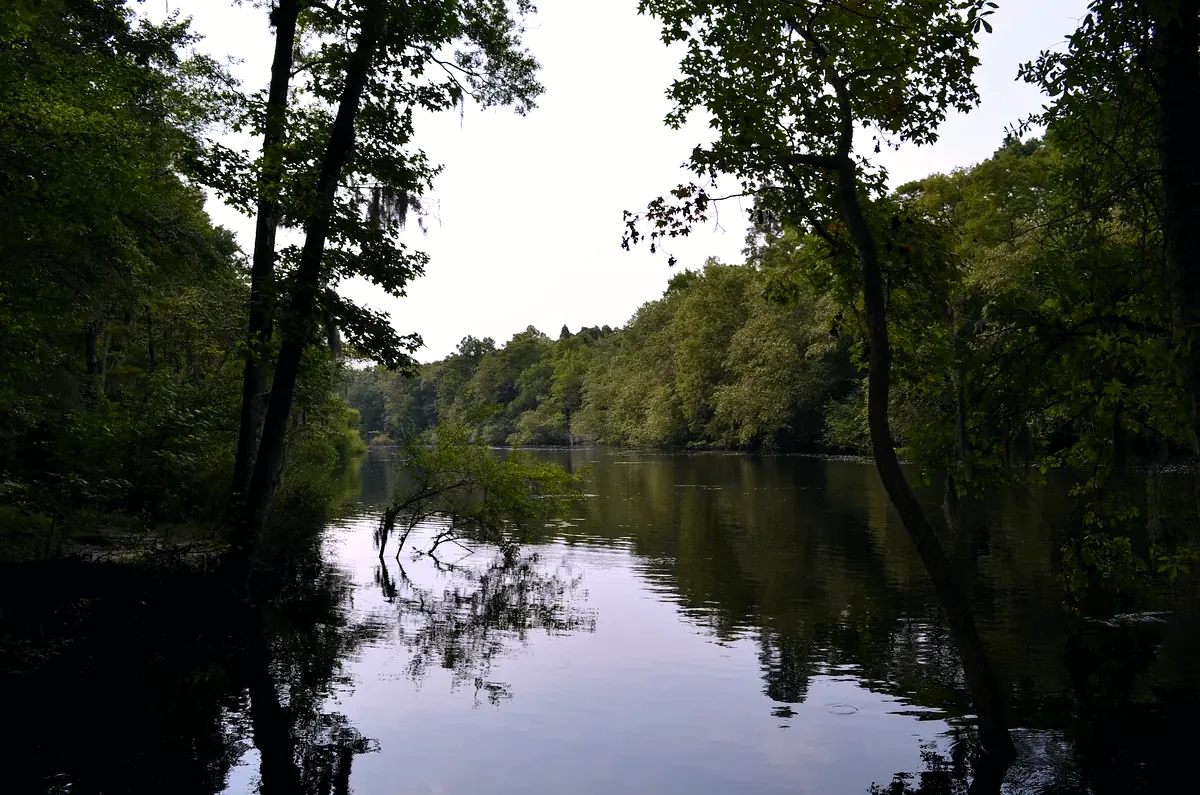

Water Source: Bushy Park Reservoir and the Edisto River, treated at the Hanahan Water Treatment Plant
Where Charleston's city water comes from
- SourceBushy Park Reservoir (about 90%) and the Edisto River (about 10%)
- TreatmentHanahan Water Treatment Plant
- DisinfectionChlorine dioxide and chloramines
- Your tapThen your own pipes and water heater, which our free test checks
Please note: This page is a plain-language overview and is not the official report. Values shown are the federal or state limits, not measured results — refer to your utility's published Consumer Confidence Report for current measured values. CCRs reflect the utility's system; conditions at your own tap can differ due to household plumbing. Book a free in-home test for tap-level data.
Key Contaminants Detected
PFAS (PFOA + PFOS)
DetectedSee current CCRLimit4.0 ppt each (EPA MCL)
The EPA's 2024 limit for PFOA and PFOS is 4.0 ppt each, with compliance due in 2029 (a proposed rule would let utilities ask for 2031). Charleston Water System reports its PFAS results in its annual report.
Total Trihalomethanes (TTHMs)
DetectedSee current CCRLimit80 ppb (EPA MCL)
A regulated disinfection byproduct. Organic-rich river source water increases the potential for its formation during treatment.
Haloacetic Acids (HAA5)
DetectedSee current CCRLimit60 ppb (EPA MCL)
A regulated disinfection byproduct with its own federal maximum contaminant level.
Lead (90th percentile)
DetectedSee current CCRLimit15 ppb action level (10 ppb from Nov 1, 2027)
Lead generally enters at the tap from household plumbing rather than at the treatment plant, so in-home testing is the way to measure your own level.
What an In-Home Test Adds to Your CCR
A Consumer Confidence Report reflects water quality within the utility's system. ClearFlow's free in-home test measures conditions at your own faucet, such as hardness, iron, manganese, pH and dissolved solids — values that can differ from system-wide results because of your home's plumbing.
Related guides
- Water Filtration & Testing in Charleston
- Free Water Testing in Charleston, SC
- PFAS Contamination in Charleston, SC: What Joint Base Charleston Means for Your Water
Frequently asked questions
Does Charleston have lead in the water?
Charleston Water System treats water with corrosion control and reports its lead sampling results. Lead typically enters from older household plumbing, so in-home testing is the only way to know the level at your own tap.
Is PFAS a concern in Charleston water?
The EPA sets limits for PFOA and PFOS (4.0 ppt each), and Charleston Water System publishes its PFAS results in its annual water quality report. PFAS needs a certified lab test, and ClearFlow can arrange one when your concerns or results call for it.
How do I get a free water test in Charleston?
Call ClearFlow at (843) 742-1196. We serve Charleston County and test for PFAS, lead, TTHMs, hardness, and other common concerns.