

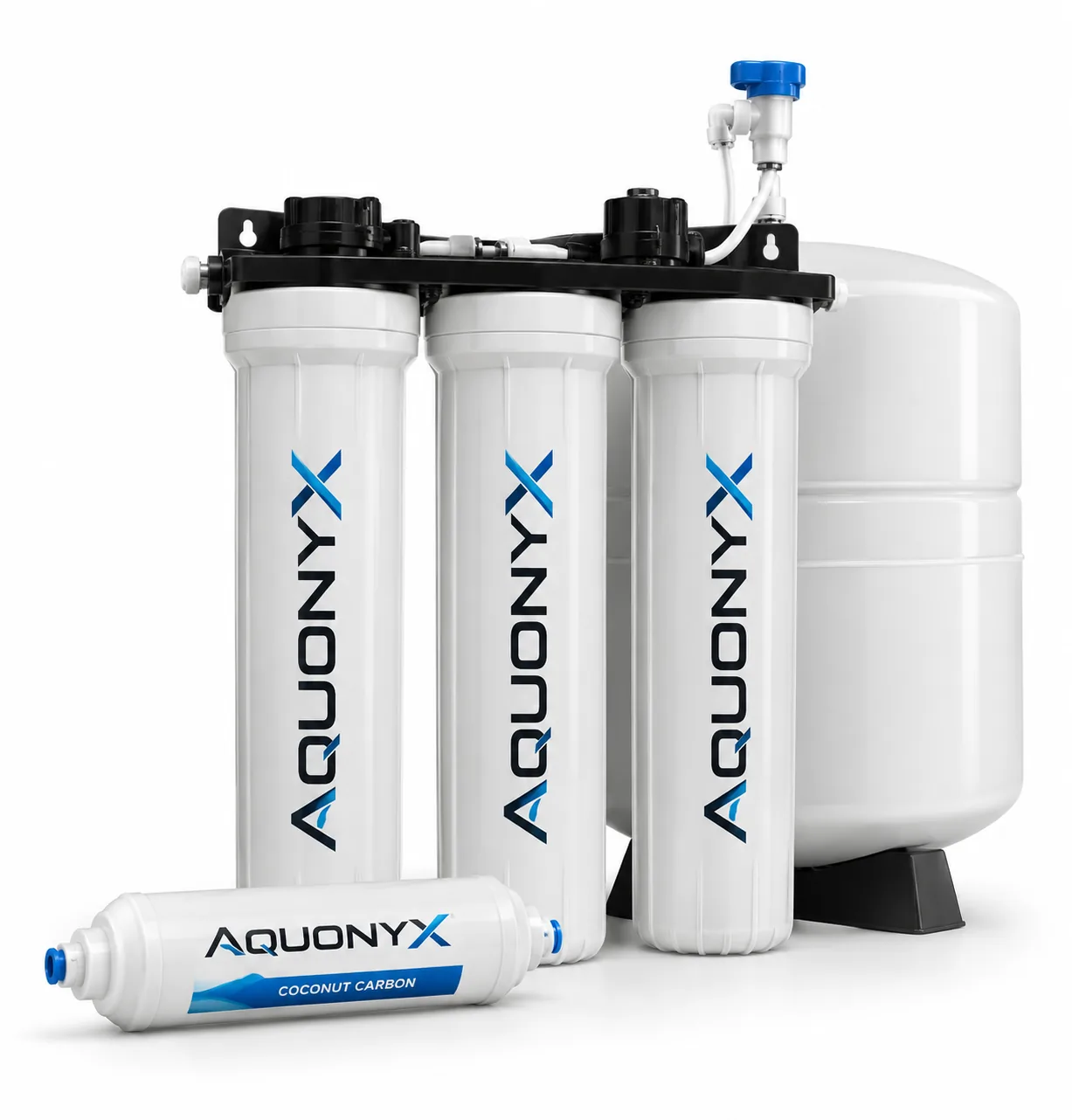
An RO membrane rejects a broad range of dissolved substances, and the EPA identifies RO among the treatment technologies for concerns like PFAS, arsenic, and nitrates.
ClearFlow installs under-sink RO systems at a dedicated faucet — but only after a free in-home water test shows what's actually in your water. Your results drive the recommendation.
What This System Addresses
PFAS 'Forever Chemicals'
PFAS have been detected in water sources across the Carolinas, and the EPA identifies reverse osmosis among the treatment technologies for regulated PFAS compounds. Specific capability is defined by each system's manufacturer specifications.
Total Dissolved Solids
RO membranes reject a broad range of dissolved solids, which is why RO-treated water typically measures dramatically lower TDS at the dedicated faucet. Your before/after numbers come from your own tests.
Nitrates
The EPA identifies reverse osmosis as a treatment technology for nitrates, which carry a 10 mg/L federal limit primarily due to risks for infants. Relevant for well water near agricultural land.
Arsenic & Heavy Metals
RO is among the EPA-identified technologies for arsenic and certain heavy metals. Whether these are present in your water is exactly what testing determines.
Sodium & Chloride
For coastal wells affected by saltwater intrusion, RO addresses elevated sodium and chloride at the drinking tap — a particular concern for low-sodium diets.
Taste & Clarity
Many households simply prefer the taste of RO water for drinking, coffee, and cooking. A dedicated faucet keeps treated water where it's consumed.
Signs to Watch For
- You want a dedicated source of treated drinking water
- PFAS has been reported in your region's water sources
- Well water tests show nitrates, arsenic, or high TDS
- Salty or brackish taste suggesting coastal intrusion
- You buy bottled water because you don't trust the tap
How It Works With ClearFlow
- 1
- Book a free in-home water test covering TDS, hardness, chlorine, and other panel items relevant to your source.
- 2
- We review your results and discuss whether point-of-use RO fits your situation.
- 3
- If it does, we recommend a specific Excalibur RO system with its manufacturer specifications and a written quote.
- 4
- Professional under-sink installation with a dedicated faucet, plus local filter-change support.
Available Across SC & NC
- Myrtle Beach, SC
- North Myrtle Beach, SC
- Conway, SC
- Murrells Inlet, SC
- Pawleys Island, SC
- Georgetown, SC
- Calabash, NC
- Wilmington, NC
- Charleston, SC
- Greenville, SC
- View All Service Areas
Reverse Osmosis by city
- Reverse Osmosis in Myrtle Beach, SC
- Reverse Osmosis in Conway, SC
- Reverse Osmosis in Wilmington, NC
- Reverse Osmosis in Charleston, SC
- Reverse Osmosis in Greenville, SC
Related guides
Frequently asked questions
What is a reverse osmosis (RO) system?
Reverse osmosis forces water through a semi-permeable membrane that rejects a broad range of dissolved substances. Under-sink RO systems treat drinking and cooking water at a dedicated faucet; each model's capabilities are defined by its manufacturer's specifications.
Does reverse osmosis address PFAS?
The EPA identifies reverse osmosis among the treatment technologies for PFAS compounds. Whether RO is appropriate for your home depends on your water test results and the specific system's manufacturer specifications.
Where does an RO system install?
Most residential RO systems install under the kitchen sink with a dedicated drinking-water faucet. Whole-home RO exists for specific situations like severe well water issues, which your test would identify.
Does RO waste water?
RO systems send a portion of water to drain as part of the membrane process. Modern systems vary in efficiency — the ratio is part of each manufacturer's published specifications, which we review with you.
How much does a reverse osmosis system cost?
Cost depends on the system selected and installation specifics. ClearFlow provides a written quote after your free in-home water test, before any commitment.