

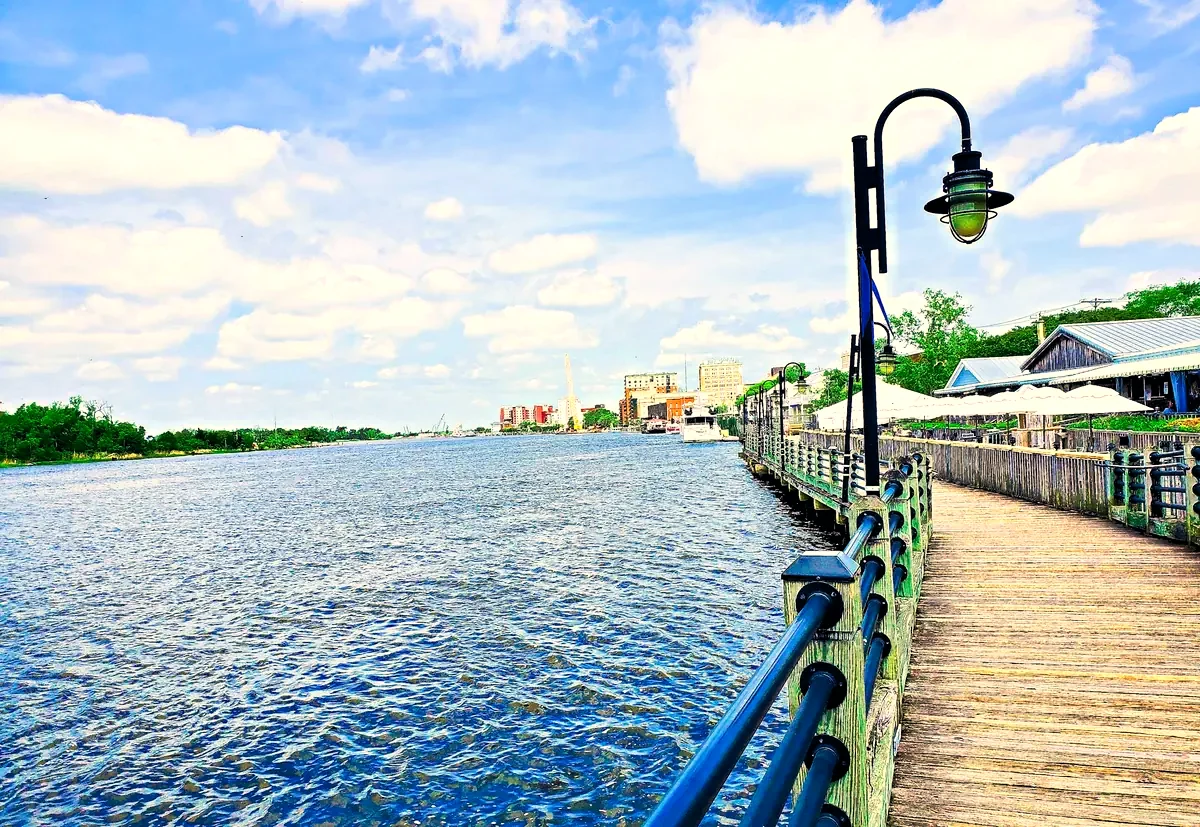
Water Source: Cape Fear River (Sweeney plant, about 80% of customers) and the Castle Hayne and PeeDee aquifers (Richardson plant)
Chlorine or chloramine: what's in Wilmington city water (CFPUA)?
| ChlorineYour water | Chloramine | |
|---|---|---|
| Stays active in the pipes | Shorter | Longer |
| Taste and smell | Stronger “pool” smell | Milder |
| Ordinary carbon filters | Remove it well | Remove it slowly |
| Whole-house filter media | Standard activated carbon | Catalytic carbon |
Please note: This page is a plain-language overview and is not the official report. Values shown are the federal or state limits, not measured results — refer to your utility's published Consumer Confidence Report for current measured values. CCRs reflect the utility's system; conditions at your own tap can differ due to household plumbing. Book a free in-home test for tap-level data.
Key Contaminants Detected
PFAS / GenX (HFPO-DA)
DetectedSee current CCRLimit10 ppt (EPA 2024 limit, proposed for rescission)
GenX discharges into the Cape Fear River have been the subject of state and federal action. EPA proposed rescinding its 10 ppt GenX limit in May 2026 (not final), and North Carolina's non-regulatory health goal is 140 ppt (NC DHHS). EPA proposed rescinding its 10 ppt GenX limit in May 2026 (not final), and North Carolina's non-regulatory health goal is 140 ppt (NC DHHS). CFPUA has implemented enhanced treatment and publishes ongoing PFAS monitoring results.
Total Trihalomethanes (TTHMs)
DetectedSee current CCRLimit80 ppb (EPA MCL)
A regulated disinfection byproduct. Organic-rich river source water increases the potential for its formation.
Haloacetic Acids (HAA5)
DetectedSee current CCRLimit60 ppb (EPA MCL)
A regulated disinfection byproduct with its own federal maximum contaminant level.
Bromide
DetectedSee current CCRLimitNo federal MCL
Bromide is not federally regulated in drinking water, but it can react with disinfectants to form brominated byproducts, which is an area of ongoing research.
What an In-Home Test Adds to Your CCR
A Consumer Confidence Report reflects water quality within the utility's system. ClearFlow's free in-home test measures conditions at your own faucet, such as hardness, iron, manganese, pH and dissolved solids — values that can differ from system-wide results because of your home's plumbing.
Related guides
- Water Filtration & Testing in Wilmington
- Free Water Testing in Wilmington, NC
- GenX in Wilmington's Water: What You Need to Know
Frequently asked questions
Is the Wilmington CFPUA water safe to drink?
CFPUA is required to meet federal standards and publishes its monitoring results, including PFAS. Because a CCR reflects the treatment system rather than your individual tap, many homeowners choose to test at home as well.
Has CFPUA addressed GenX?
CFPUA has implemented granular activated carbon and other enhanced treatment to reduce PFAS, and publishes its current monitoring results at cfpua.org. Refer to those published results for the latest levels.
Where can I find the official CFPUA water quality report?
The official CFPUA Consumer Confidence Report is published annually at cfpua.org. Always refer to the utility's published report for current measured values.
How do I get a free water test in Wilmington?
Call ClearFlow at (843) 742-1196. Our free in-home test covers the common readings at your tap, such as hardness, chlorine or chloramine, iron, pH and dissolved solids. PFAS/GenX, lead and disinfection byproducts need a certified lab, which we can arrange.